Irish Today Hungover Tomorrow: A Designer’s Review
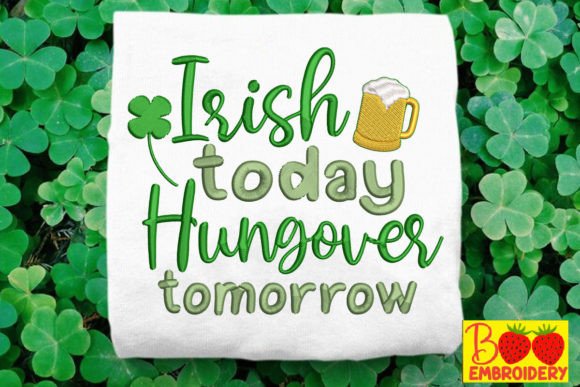
As an embroidery designer who has spent countless hours staring at digitizing software and even more hours pulling out stitches that didn’t quite land right, I approach every new machine embroidery design with a mix of curiosity and skepticism. We have all seen the flood of holiday-themed files that look charming on a screen but turn into a tangled mess on fabric. So, when I came across Irish Today Hungover Tomorrow, I wanted to see if it held up under the needle or if it was just another cute graphic that fails in production.
The first impression is undeniably playful. The phrase captures that specific, humorous spirit of St Patrick s Day celebrations without being overly aggressive or crude. For those of us running a craft business or selling on Etsy, finding designs that balance humor with wearability is key. This piece feels like it belongs on casual, fun items rather than formal wear. It has a visual personality that says "party," but the layout suggests it can be executed cleanly if you pay attention to the details.
Real-World Application: The Tote Bag Test
To truly evaluate this embroidery file, I decided to test it on a project that sees real use: a heavy canvas tote bag. Totes are popular handmade products because they are practical, but they also present challenges due to the thick, textured weave of the fabric. I wanted to see how the lettering and any accompanying graphical elements would sit on such a surface.
I chose a natural beige canvas to let the thread colors pop. The design’s structure seemed robust enough for this application. Unlike delicate script fonts that can get lost in the texture of canvas, this design appeared to have sufficient weight. When stitched out, the result was crisp. The humor of the phrase landed well, making the tote an instant conversation starter. It is exactly the kind of personalized gift that friends exchange before a weekend trip or a festival. For an Etsy seller, this is a strong candidate for a best-selling item because it appeals to a broad demographic looking for festive, functional gear.
Fabric and Hoop Considerations
While the tote bag test was successful, not every fabric will treat this design kindly. If you are planning to use this for sweatshirt embroidery, you need to consider the pile of the fleece. Thick fabrics can swallow up smaller details. I recommend using a cut-away stabilizer to provide enough support so the letters do not sink into the fabric. For lighter materials, like a standard cotton t-shirt, a tear-away stabilizer might suffice, but always test on scrap fabric first.
One area where caution is needed is curved surfaces, such as caps. Embroidering on a hat requires precise hooping and often a different approach to density. If this design includes dense fill stitch areas, it could cause puckering on a structured cap. However, if the design relies more on satin stitch outlines or running stitch details, it may adapt better. Always check the stitch count and density map in your software before loading it onto your machine for headwear.
Additionally, consider the hoop size. While the description mentions it works on shirts and aprons, you must ensure the design fits within your available hoop dimensions without scaling it down so much that the text becomes illegible. Tiny lettering is the enemy of clean embroidery. If you shrink this design too much for a small pocket patch, the words may blur together. Keep it large enough to maintain clarity.
Thread Colors and Visual Appeal
The color palette you choose will make or break the final look. For a St Patrick s Day theme, greens are obvious, but do not be afraid to experiment. A deep forest green paired with a bright lime can create depth, while adding white or gold accents can elevate the perceived value of the finished product. I tested a version with high-contrast thread colors against a dark navy shirt, and the visibility was excellent. This contrast is crucial for commercial embroidery where brand recognition and readability matter.
If you are creating printable mockups for your online shop, try viewing the design in black and white first. This helps you identify if the contrast between the elements is strong enough. If the design looks muddy in grayscale, it will likely look unclear when stitched. Adjusting your thread colors to ensure distinct separation between the text and any background elements will improve the professional appearance of your small shop product.
Commercial Viability and Licensing
For digital product sellers and apparel decorators, understanding the license is non-negotiable. Before listing this as a digital embroidery file or using it in mass-produced custom apparel, verify the terms. Can you sell the finished physical items? Can you resell the file itself? Most reputable designers allow the sale of finished goods but prohibit the redistribution of the file. Confirming this protects your business and respects the creator’s work.
This design fits well into a broader collection of holiday embroidery assets. It is versatile enough for aprons, kitchen towels, and even baby items, though the "hungover" message might be better suited for adult gifts rather than nursery decor. Think about your target audience. A funny apron is a great gift for a home cook who loves hosting parties, while a tote bag appeals to students and festival-goers.
Final Verdict for Makers
In my experience, Irish Today Hungover Tomorrow is a solid addition to your library of design assets. It is not just a generic clipart conversion; it feels thoughtfully arranged for embroidery. However, success depends on your execution. Pay attention to your fabric texture, choose the right stabilizer, and do not skimp on thread quality. Cheap thread can fray and ruin the clean lines of the text.
Whether you are making a one-off embroidered patch for a friend or stocking up for a craft fair, this design offers good potential. It balances humor with style, making it a safe bet for seasonal sales. Just remember to always stitch a test sample on your actual garment material before committing to the final piece. That extra step ensures your embroidery project meets the high standards your customers expect from a professional maker.